Position the bed as the anchor
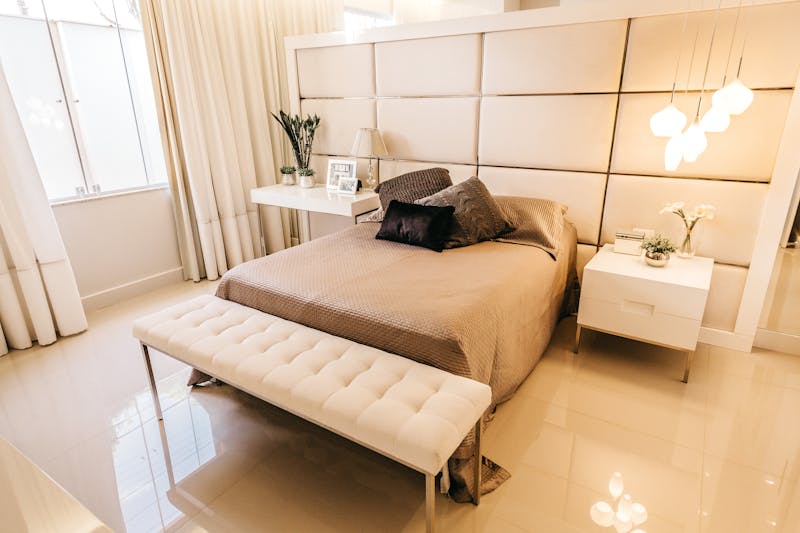
In most bedrooms, the bed is the largest piece of furniture and should be placed first, ideally centered on the longest wall, away from direct drafts from doors or windows where possible.
Keep pathways clear
A cluttered path to the bed or bathroom can disrupt sleep routines, especially for middle-of-the-night trips. Leaving at least two feet of clearance around the bed makes the room easier to navigate in low light.
Reduce visual stimulation near the bed
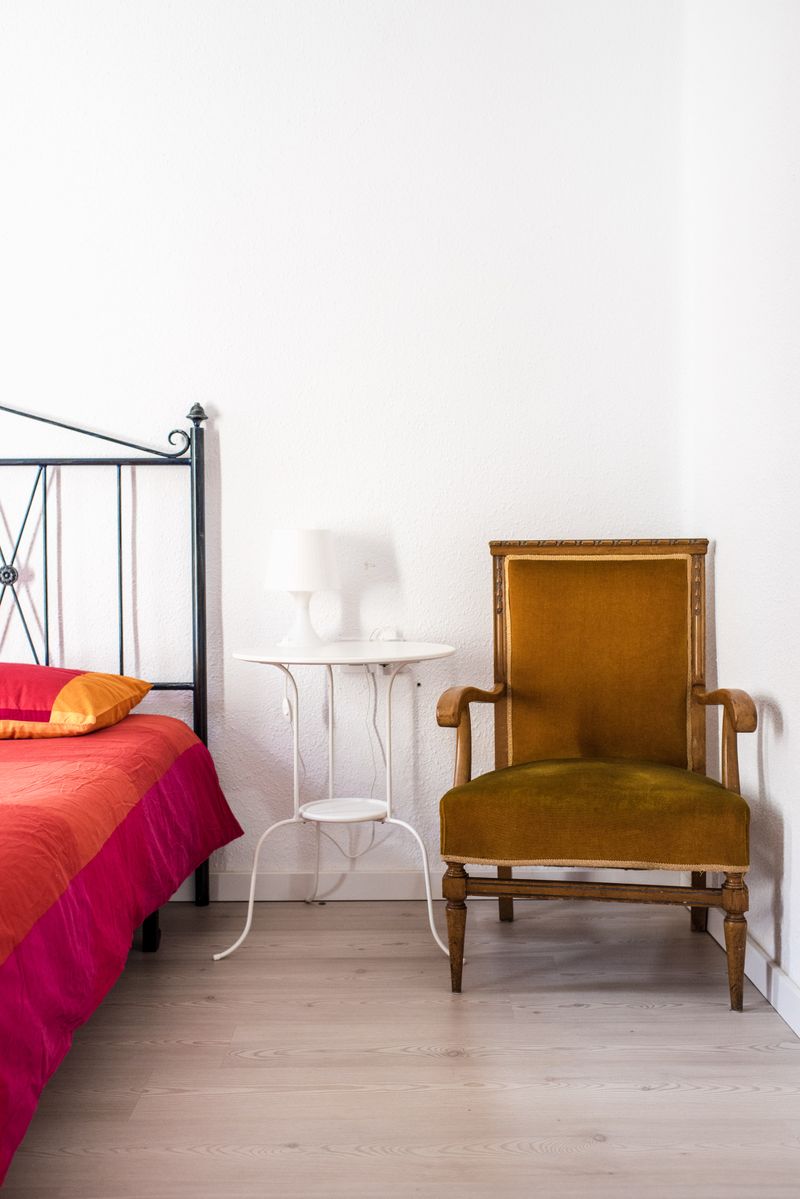
Electronics, work materials, and visual clutter near the bed are commonly cited as disruptive to winding down. Keeping nightstands relatively simple and moving desks or TVs to another part of the room, if possible, supports a calmer environment.
Consider light control
Blackout curtains or blinds, positioned to fully cover the window rather than just the frame, can meaningfully reduce early morning or streetlight disruption for light-sensitive sleepers.